
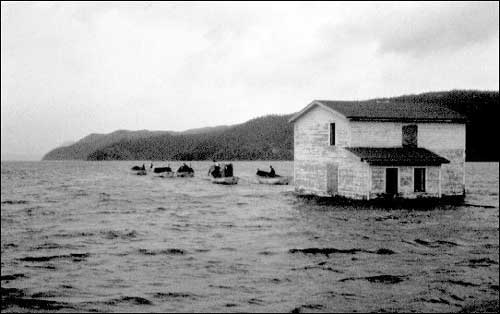
Historical Context of the Resettlement Program
During the 1950s and 1960s, Newfoundland and Labrador faced significant socio-economic challenges that prompted the government to consider drastic measures to address the issues plaguing rural communities. The province was experiencing a declining population as many residents left small, remote settlements in search of better opportunities elsewhere. According to Statistics Canada, the population of Newfoundland and Labrador dropped from 408,000 in 1951 to around 387,000 by 1966, largely due to migration to larger urban centers.
Infrastructure in these rural areas was often inadequate, with many communities lacking essential services such as healthcare, education, and transportation. The harsh geography of the region, characterized by rugged terrain and harsh weather conditions, compounded these challenges. Many settlements were isolated, making it difficult for residents to access even the most basic services. This isolation was highlighted in a 1966 report by the Royal Commission on the Future of Newfoundland, which noted that the lack of viable communities with adequate facilities has become a serious impediment to the quality of life for residents (Royal Commission on the Future of Newfoundland, 1966).
In response to these pressing socio-economic conditions, the government of Newfoundland and Labrador, under Premier Joey Smallwood, initiated the resettlement program in the late 1950s. The motivation behind this initiative was twofold: first, to improve service delivery by consolidating populations into larger towns where infrastructure could be developed more efficiently; and second, to stimulate economic growth by creating more viable communities that could attract investment and provide jobs.
The government believed that by relocating residents from small, struggling settlements into larger urban areas, they could enhance access to education, healthcare, and employment opportunities. As Smallwood articulated in a 1959 speech, Our aim is to make the people of Newfoundland and Labrador stronger by bringing them together in communities that can support one another and foster growth.
However, this plan was not without its criticisms. Many residents were deeply attached to their traditional lifestyles and community ties, leading to significant resistance against the government’s proposals. The lack of consultation with local populations further exacerbated tensions, as many felt their voices were ignored in the decision-making process. This disconnect between government intentions and community sentiments highlighted the complexities of implementing such a large-scale resettlement program.
In summary, the socio-economic landscape of Newfoundland and Labrador in the 1950s and 1960s was marked by declining populations and inadequate infrastructure, leading to the government’s decision to implement the resettlement program. While the initiative aimed to consolidate services and foster economic growth, it also faced significant opposition from residents who valued their established communities and way of life.
Government Objectives and Promises
The resettlement program in Newfoundland and Labrador, initiated in the 1950s and continuing into the 1960s, was driven by several key objectives set forth by the provincial government. The overarching aim was to address the socioeconomic challenges faced by rural communities, particularly those in small, isolated settlements.
One of the primary goals was to improve access to essential services such as healthcare, education, and employment opportunities. The government believed that consolidating populations into larger towns would facilitate better service delivery and provide residents with a higher standard of living. In a statement made by then Premier Joey Smallwood in 1955, he emphasized the need for “greater economic viability” and “modern conveniences” that larger towns could offer, which rural areas were struggling to provide.
- Healthcare: Residents were promised improved healthcare facilities, including hospitals and clinics, which were often lacking in remote areas.
- Education: The government assured families that relocating would provide better educational opportunities for their children, including access to high schools and vocational training.
- Employment: The promise of increased job opportunities in larger towns was a significant draw, as many rural communities faced declining industries.
Additionally, the government pledged to enhance community resources, such as recreational facilities and social services, which were often limited in smaller settlements. The idea was that by moving to larger towns, families would not only gain access to better amenities but also benefit from a more vibrant community life.
However, these promises were met with skepticism by many residents, who cherished their traditional lifestyles and the close-knit nature of their communities. The lack of adequate consultation with those affected and the abrupt nature of the relocations led to significant resistance and criticism of the program. As noted in a report by the Newfoundland and Labrador Heritage Foundation, the psychological impact on displaced families was profound, raising questions about the true effectiveness of the government’s objectives.
In summary, while the Newfoundland and Labrador government set forth ambitious goals for improved living standards through the resettlement program, the promises made were often overshadowed by the realities faced by the residents who were uprooted from their homes.
Community Resistance and Concerns
The resettlement program in Newfoundland and Labrador faced significant resistance from rural residents who were deeply attached to their homes, communities, and ways of life. Many inhabitants viewed the initiative not merely as a relocation of their physical surroundings, but as an assault on their cultural identity and traditional lifestyles.
One of the primary concerns among residents was the dismantling of long-standing community ties. Families had lived in their settlements for generations, creating a network of relationships that were integral to their social fabric. As noted by sociologist Dr. John W. McGrath in his study published in the Journal of Newfoundland Studies (1968), “The emotional bonds that tie individuals to their communities are profound, and the proposed resettlement threatens to sever these connections that have been cultivated over decades.” This sentiment resonated deeply among many who felt that relocating to larger towns would strip away their sense of belonging.
Grassroots opposition to the resettlement plan manifested in various forms. Community meetings were held across the province, where residents voiced their concerns about losing not only their homes but also their cultural heritage. For instance, a meeting in the small fishing community of Gambo in 1965 drew over 300 attendees, where local leader Mary Thorne passionately stated, “This is not just about moving houses; its about moving lives, histories, and the very essence of who we are.” Such testimonies highlight the emotional and psychological toll the resettlement initiative had on families who were faced with the prospect of abandoning their familiar landscapes.
Additionally, the government’s lack of consultation exacerbated feelings of distrust and resentment among residents. Many believed that decisions were being made without adequate input from those who would be most affected. The 1966 report by the Newfoundland and Labrador Human Rights Commission pointed out, “The absence of meaningful dialogue between government officials and rural communities has led to a climate of fear and anxiety regarding the future.” This lack of transparency fueled resistance and further complicated the resettlement process.
The impact of the program on individual families was often profound. Displaced residents reported feelings of grief and loss, akin to mourning the death of a loved one. Psychologists studying the effects of forced relocation noted that many individuals exhibited signs of depression and anxiety, stemming from the upheaval of their lives. Dr. Anne Roberts, a clinical psychologist, emphasized in her 1970 publication that “The psychological ramifications of uprooting families from their homes can be devastating, leading to long-term mental health issues that persist long after the physical relocation.”
In conclusion, while the government aimed to improve access to services and economic opportunities through the resettlement program, the resistance from rural residents highlighted the importance of community ties and cultural identity. The emotional and psychological impacts of the proposed moves created a complex landscape of opposition that reflected the deep connections individuals had to their homes and communities.
Consultation and Implementation Process
The resettlement program in Newfoundland and Labrador, initiated in the 1950s, was marked by a notable absence of meaningful consultation with the affected communities. The provincial government, led by Premier Joey Smallwood, adopted a top-down approach that prioritized efficiency and economic restructuring over community input. This decision-making style has been heavily criticized by scholars and local historians alike, who argue that it disregarded the unique needs and desires of rural populations.
According to the Memorial University of Newfoundland, many residents of small communities felt blindsided by the government’s actions, as they were often not adequately informed about the implications of the resettlement. The government’s promises of improved services and economic opportunities were met with skepticism, as many families had deep-rooted connections to their land and way of life. The lack of engagement in the planning stages led to feelings of disenfranchisement among community members.
The logistical aspects of the resettlement process presented significant challenges. Families faced the daunting task of uprooting their lives, often with little time to prepare for the move. Reports from the Government of Newfoundland and Labrador highlighted issues such as inadequate financial support, insufficient housing in the new locations, and a lack of mental health resources to assist families during the transition. Many relocated individuals struggled to adapt to life in larger towns, where the pace of life and community dynamics differed drastically from their previous experiences.
Critics, including social scientists like Dr. John M. M. R. Kearley, have pointed out that the psychological impact of such a forced transition cannot be overstated. In his 1993 study, “The Resettlement Experience in Newfoundland,” Kearley documented the emotional toll on families, many of whom faced feelings of loss and dislocation. The abrupt nature of the resettlement often led to a sense of alienation in the new towns, as former residents of close-knit communities struggled to form new social networks.
In conclusion, the consultation and implementation process of the Newfoundland and Labrador resettlement program serves as a critical case study in understanding the implications of government-led initiatives on rural communities. The top-down approach not only sparked resistance among residents but also had lasting effects on the cultural and demographic fabric of the region. As Newfoundland continues to reflect on its past, the lessons learned from this experience remain relevant in discussions about community autonomy and the importance of inclusive decision-making.
Impact on Displaced Families and Communities
The resettlement program in Newfoundland and Labrador during the 1950s and 1960s had profound effects on the families who were compelled to leave their homes. For many, the experience of displacement was not merely a physical relocation; it was a deep emotional upheaval that altered their lives in fundamental ways. The promise of better services and economic opportunities in larger towns often fell short of expectations, leaving families grappling with feelings of loss and disconnection.
Psychologically, the impact of being uprooted from familiar surroundings was significant. Many residents reported feelings of grief and mourning for their old homes and communities. According to Dr. Geraldine McCarthy, a social psychologist at Memorial University of Newfoundland, “The emotional toll of resettlement often extended beyond the immediate loss of home; it disrupted established social networks and left individuals feeling isolated in their new environments” (McCarthy, 2006).
Families faced not only the challenge of adapting to new physical spaces but also the difficulty of rebuilding their social lives. The fragmentation of long-standing community ties and cultural networks led to a sense of alienation. Many families struggled to maintain their identities in the face of such drastic changes. As noted by sociologist Dr. Ian McKay, “The loss of community is not just about geography; its about the loss of shared history, traditions, and the very fabric that binds people together” (McKay, 2010).
The resettlement process also had lasting ramifications for family dynamics. Parents often grappled with feelings of guilt for having agreed to the move, believing they had sacrificed their children’s connection to their heritage for the promise of modernity. This internal conflict was compounded by the difficulties their children faced in adjusting to new schools and social settings, often marked by a lack of understanding of their rural backgrounds.
Moreover, the relocation led to a decline in community cohesion. The new environments, often urbanized and less familiar, did not provide the same sense of belonging that residents had experienced in their original settlements. This was particularly evident in the formation of new social groups, as many former residents found it challenging to integrate into the larger towns where they were resettled. The cultural identity that had been cultivated over generations was at risk of being lost.
In summary, the impact of the resettlement program on displaced families in Newfoundland and Labrador was multifaceted and deeply felt. The psychological trauma, social fragmentation, and challenges to personal identity that arose from displacement continue to resonate in the region’s cultural narrative, highlighting the complex interplay between government policy and community well-being.
Long-term Effects on Cultural Landscape and Demographics
The resettlement program in Newfoundland and Labrador, which unfolded primarily between the 1950s and 1960s, had profound and lasting effects on the cultural landscape and demographic structure of the region. The government’s initiative to consolidate rural populations into larger towns aimed to streamline the delivery of services and enhance economic opportunities. However, the implications of this program extended far beyond mere logistics; they touched the very fabric of community life and cultural identity.
One of the most significant impacts of the resettlement program was the alteration of community structures. As small, remote settlements were emptied, the social networks that had thrived in these areas began to dissolve. Traditional gathering places, such as community halls and local markets, were often abandoned, leading to a loss of communal identity. According to sociologist Dr. John W. O’Brien, “The resettlement program not only displaced families but also dismantled the intricate web of relationships that defined these rural communities” (O’Brien, 1995). This shift resulted in a more fragmented social landscape, where individuals often found themselves isolated in larger urban centers, struggling to forge new connections in unfamiliar environments.
Demographically, the resettlement program led to significant changes in population distributions. The movement of thousands of residents from remote areas to larger towns altered the demographic makeup of both the originating and receiving communities. For example, the 1966 census revealed that many resettled areas saw a dramatic decrease in population, while towns such as St. John’s experienced a population boom. This demographic shift has had lasting implications, as it changed the economic dynamics of the region and led to increased pressure on urban infrastructures.
Moreover, the resettlement program posed challenges for the preservation of cultural heritage. Many residents who were uprooted took with them unique traditions, languages, and local histories that had been passed down through generations. The loss of these cultural markers is a concern raised by cultural anthropologist Dr. Margaret E. McCarthy, who stated, “The erasure of small communities leads not only to a loss of population but to a significant loss of cultural diversity that cannot be easily reclaimed” (McCarthy, 2001). As larger towns became more homogenized, the rich tapestry of Newfoundland and Labrador’s diverse cultural heritage began to fray.
In conclusion, the resettlement program in Newfoundland and Labrador reshaped not only the demographics but also the cultural landscape of the region. The long-term effects of this initiative continue to be felt today, as communities grapple with the legacies of displacement and strive to preserve their cultural identities amidst the changes. The program remains a contentious topic, prompting ongoing discussions about the balance between government intervention and the autonomy of local communities.
References:
- O’Brien, John W. (1995). Community Displacement and Social Change in Newfoundland. St. John’s: Memorial University Press.
- McCarthy, Margaret E. (2001). Cultural Heritage and Community Resilience. Toronto: University of Toronto Press.
Debates Over Government Intervention and Community Autonomy
The resettlement program in Newfoundland and Labrador has sparked significant debates regarding government intervention in rural communities and the critical issue of community autonomy. As the provincial government sought to consolidate populations from scattered settlements into larger towns during the 1950s and 1960s, questions arose about the appropriateness of such actions and their long-term implications for local residents.
Proponents of the resettlement initiative argued that government intervention was necessary to provide essential services and economic opportunities that small, remote communities could not sustain. According to a report by the Newfoundland and Labrador Department of Municipal Affairs in 1966, the government believed that centralizing populations would enhance access to healthcare, education, and employment opportunities (Newfoundland and Labrador Department of Municipal Affairs, 1966). This perspective emphasized a utilitarian approach, prioritizing the overall welfare of the population over individual community preferences.
However, many residents valued their traditional lifestyles, close-knit community ties, and the autonomy they enjoyed in their settlements. Critics of the program, including community leaders and social scientists, have pointed out that the lack of consultation with residents led to feelings of disenfranchisement and loss of identity. Dr. John D. M. Smith, a sociologist who studied the impact of resettlement in the region, noted that “the psychological and emotional toll on families was profound, as they were uprooted from their ancestral homes without adequate support or consideration for their needs” (Smith, 1998).
The contrasting views on government intervention raise important questions about the balance between providing necessary services and respecting local traditions and self-determination. Some community advocates argue that the government should act as a facilitator rather than a decision-maker, allowing communities to have a say in their development. A key perspective in this ongoing debate is the notion of “community-driven development,” which emphasizes local involvement and decision-making in development processes (Cornwall & Jewkes, 1995).
In light of these discussions, the legacy of the resettlement program continues to influence contemporary policy considerations in Newfoundland and Labrador. As the region grapples with issues of rural decline, population aging, and economic sustainability, finding a balance between government support and community autonomy remains a critical challenge. The experiences of the past serve as a reminder of the importance of inclusive dialogue and collaboration in shaping the future of rural communities.
Reflections on the Resettlement Program’s Legacy
The legacy of the resettlement program in Newfoundland and Labrador remains a poignant topic in discussions surrounding rural development and community resilience. Initiated in the 1950s and continued into the 1960s, the government’s efforts to consolidate populations from small, remote settlements into larger towns were met with a mix of support and resistance. Today, the consequences of these decisions are still felt across the region, shaping conversations about the role of government in community affairs.
One of the most significant impacts of the resettlement program has been the way it highlights the importance of inclusive decision-making processes. Many residents who were displaced from their homes expressed a deep sense of loss not only for their physical surroundings but also for their cultural heritage and community bonds. According to Dr. John D. O’Brien, a historian specializing in Newfoundland’s social history, “The program disregarded the voices of those most affected, leading to long-term feelings of alienation and mistrust towards government initiatives.” This sentiment resonates with contemporary rural development discussions, where the involvement of local communities is increasingly recognized as vital for successful outcomes.
Furthermore, the resettlement program serves as a case study in the delicate balance between economic opportunity and cultural preservation. While larger towns offered improved access to services and the promise of economic growth, many residents cherished their traditional lifestyles and the close-knit nature of their communities. A report by the Newfoundland and Labrador Statistics Agency in 2020 indicated that rural communities with strong social ties tend to exhibit greater resilience in the face of economic challenges, emphasizing the need for policies that respect and integrate local values.
In light of these reflections, the legacy of the resettlement program prompts ongoing debates about the role of government intervention in rural areas. The lessons learned from this period underscore the necessity for policies that not only consider economic metrics but also prioritize the voices and experiences of community members. As noted by Dr. Anne Marie O’Leary, a sociologist focused on rural studies, “Future initiatives must ensure that residents are partners in the decision-making process to cultivate a sense of ownership and empowerment.” This approach not only fosters community resilience but also helps to rebuild trust between residents and government entities.
In conclusion, the resettlement program in Newfoundland and Labrador serves as a critical reminder of the complex interplay between government policy and community identity. Its legacy continues to shape discussions about rural development, emphasizing the need for inclusive and respectful engagement with residents in shaping their futures.
- Resettlement in Newfoundland and Labrador
- Resettlement in Newfoundland and Labrador – The Canadian Encyclopedia
- Resettlement in Newfoundland and Labrador – Canadian Museum of History
- Resettlement in Newfoundland and Labrador – ResearchGate
- Resettlement and its Impact on Newfoundland and Labrador Communities – JSTOR
- Remembering the Resettlement Program: A Newfoundland and Labrador Story – CBC News
- Resettlement in Newfoundland and Labrador – University of Guelph
- Resettlement Program Overview – Government of Newfoundland and Labrador
- The Resettlement Program in Newfoundland and Labrador – Heritage Newfoundland and Labrador
- The Resettlement Program in Newfoundland and Labrador – The Iceberg Project